
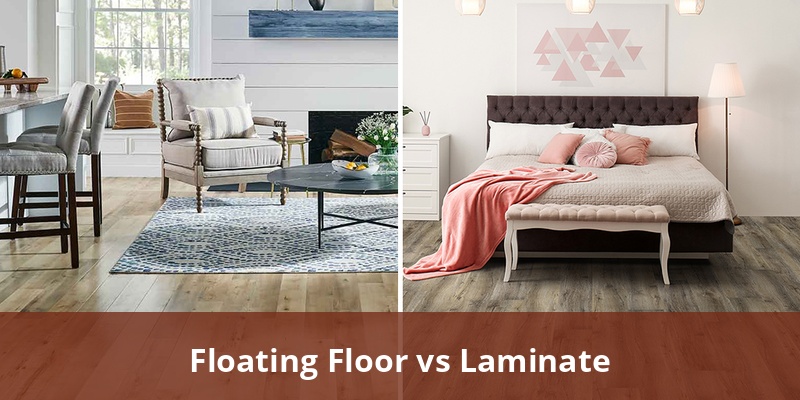
When renovating your home, flooring decisions often create confusion, particularly between terms like “floating floor” and “laminate.” Many homeowners mistakenly believe these are competing products, when in fact, they represent different concepts. A floating floor refers to an installation method, while laminate is a specific flooring material that can be installed using the floating technique. This comprehensive guide clarifies this distinction and examines the costs, installation requirements, leading manufacturers, and advantages of each option to help you make an informed decision for your next flooring project.
A floating floor isn’t a type of flooring material but rather an installation method where the flooring isn’t directly attached to the subfloor. In floating installation, individual planks or tiles connect to each other, not to the surface below, creating a unified “floating” layer that sits atop the subfloor. This method typically utilizes click-lock or tongue-and-groove systems that allow pieces to fit together securely without nails or glue.
Need Flooring Help? Call 877-761-0420 for Local Quotes
Several flooring materials can be installed as floating floors, including laminate, luxury vinyl, engineered hardwood, and some cork and bamboo products. The floating method has gained popularity because it’s generally faster to install, more DIY-friendly, and allows for natural expansion and contraction of flooring materials with temperature and humidity changes.
What is Laminate Flooring?
Laminate flooring is a specific flooring product consisting of multiple layers fused together. The typical construction includes a wear layer, decorative layer, core layer, and backing layer. The wear layer protects against scratches and fading, while the decorative layer features high-resolution images that mimic natural materials like hardwood or stone.
The core typically consists of high-density fiberboard (HDF) or medium-density fiberboard (MDF), providing stability and impact resistance. Modern laminate often features impressive technological advancements that create realistic textures and appearances, making it increasingly difficult to distinguish from the natural materials it imitates. Most laminate flooring is installed using the floating method, though some varieties can be glued down.
Floating Floor vs. Laminate: Clarifying the Relationship
The comparison between floating floors and laminate creates confusion because they’re not comparable categories. It’s like comparing a cooking method (baking) to a food item (bread) â one is a technique, the other is a product. Laminate flooring is most commonly installed as a floating floor, but other products like luxury vinyl plank (LVP) and engineered hardwood can also use floating installation.
When people discuss “floating floor vs. laminate,” they might actually be comparing laminate to other flooring types that use floating installation, or comparing floating installation to other methods like glue-down or nail-down approaches. For clarity in this article, we’ll examine laminate flooring (installed as a floating floor) against other common flooring options that use the floating installation method.
Pricing Comparison
Laminate flooring typically costs between $1 and $5 per square foot for materials alone, with premium options reaching up to $7 per square foot. The price varies based on thickness, wear layer quality, and visual realism. Budget laminate often lacks durability and realistic appearance, while mid-range options ($2-$3.50) generally offer good value.
Need Flooring Help? Call 877-761-0420 for Local Quotes
Other floating floor options include:
| Floating Floor Type | Price Range (per sq ft) | Notable Features |
|---|---|---|
| Luxury Vinyl Plank | $2-$7 | Waterproof, highly durable |
| Engineered Hardwood | $4-$12 | Real wood veneer, more natural appearance |
| Cork Floating Floor | $3-$8 | Eco-friendly, soft underfoot |
| Bamboo Floating Floor | $3-$9 | Sustainable, hardwood alternative |
According to industry data from Floor Critics, floating floor materials have seen a 15-20% price increase since 2020 due to supply chain challenges and increased demand for home renovation materials.
Installation Costs
The installation method significantly impacts overall project costs. Professional installation for floating floors typically ranges from $2 to $5 per square foot, depending on your location, floor preparation needs, and complexity of the layout. Labor costs are generally similar whether you’re installing laminate, LVP, or engineered hardwood as floating floors.
Factors that can increase installation costs include:
- Removal and disposal of existing flooring ($1-$2 per square foot)
- Subfloor repair or leveling ($2-$6 per square foot)
- Complex room layouts requiring numerous cuts
- Installation of underlayment ($0.30-$1 per square foot for materials)
- Furniture moving and baseboards removal/replacement
DIY installation can save significantly on labor costs, and floating floors are among the most DIY-friendly options. However, professional installation often comes with workmanship guarantees and may be required to maintain warranty coverage for some premium products.
Pros and Cons of Laminate Floating Floors
Advantages of Laminate Flooring
- Cost-effective compared to natural hardwood or stone
- Wide variety of designs mimicking expensive materials
- Relatively scratch-resistant and durable for high-traffic areas
- Easy maintenance with simple sweeping and occasional damp mopping
- Floating installation allows for DIY-friendly projects
- Can be installed over most existing flooring, minimizing demolition
- Resistant to fading from UV exposure
Disadvantages of Laminate Flooring
- Not water-resistant unless specifically designed with waterproof features
- Cannot be refinished when damaged
- May produce hollow sound underfoot without quality underlayment
- Lower resale value compared to hardwood
- Can feel harder underfoot than natural wood
- Potential for formaldehyde emissions in some lower-quality products
Pros and Cons of Other Floating Floor Options
Luxury Vinyl Plank (Floating)
Pros: Completely waterproof, extremely durable, comfortable underfoot, realistic appearance. LVP has become the fastest-growing segment in the flooring industry, with 29% market growth in 2021 according to Floor Covering News.
Cons: Can be damaged by sharp objects, potential for VOC emissions, not environmentally friendly at end of life.
Engineered Hardwood (Floating)
Pros: Real wood surface, stable construction resists warping, some products can be refinished, adds resale value to homes.
Need Flooring Help? Call 877-761-0420 for Local Quotes
Cons: Higher cost than laminate, still susceptible to water damage, thinner veneer options cannot be refinished.
Top Brands for Floating Floors
Best Laminate Flooring Brands
- Pergo – Pioneer in laminate flooring with excellent warranties and proprietary water-resistant technology
- Mohawk RevWood – Premium laminate with advanced water resistance and realistic wood visuals
- Shaw Repel – High-performance water-resistant laminate with extensive style selection
- QuickStep – Known for innovative locking systems and design variety
- TrafficMaster – Budget-friendly option available at Home Depot with decent performance
Top Luxury Vinyl Floating Floor Brands
- COREtec – Innovator in waterproof floating floors with patented core construction
- Karndean – Designer-focused LVP with exceptional realism
- Shaw Floort̩ РHigh-performance waterproof vinyl with enhanced stability
- NuCore – Floor & Decor’s house brand offering good value and waterproof performance
Leading Engineered Hardwood Floating Floors
- Bruce – Widely available with various price points and wood species
- Anderson Tuftex – Premium engineered hardwood with designer aesthetics
- Mannington – Known for innovative designs and environmental commitment
Making the Right Choice for Your Home
When deciding on the best floating floor option for your home, consider these key factors:
- Moisture exposure – For bathrooms, kitchens, or basements, waterproof LVP may outperform laminate
- Traffic levels – Higher wear layers (12mil+) provide better durability in busy households
- Subfloor condition – Floating floors require relatively level subfloors for proper installation
- Budget constraints – Balance initial costs with long-term durability expectations
- DIY capability – Most floating floors are DIY-friendly, but some click systems are easier than others
Industry experts recommend purchasing 10% extra flooring beyond your measured square footage to account for waste, cuts, and potential future repairs. Additionally, acclimating your floating floor material to your home’s environment for 48-72 hours before installation can prevent future expansion and contraction issues.